

Interview Spotlight
Brian
Joyner
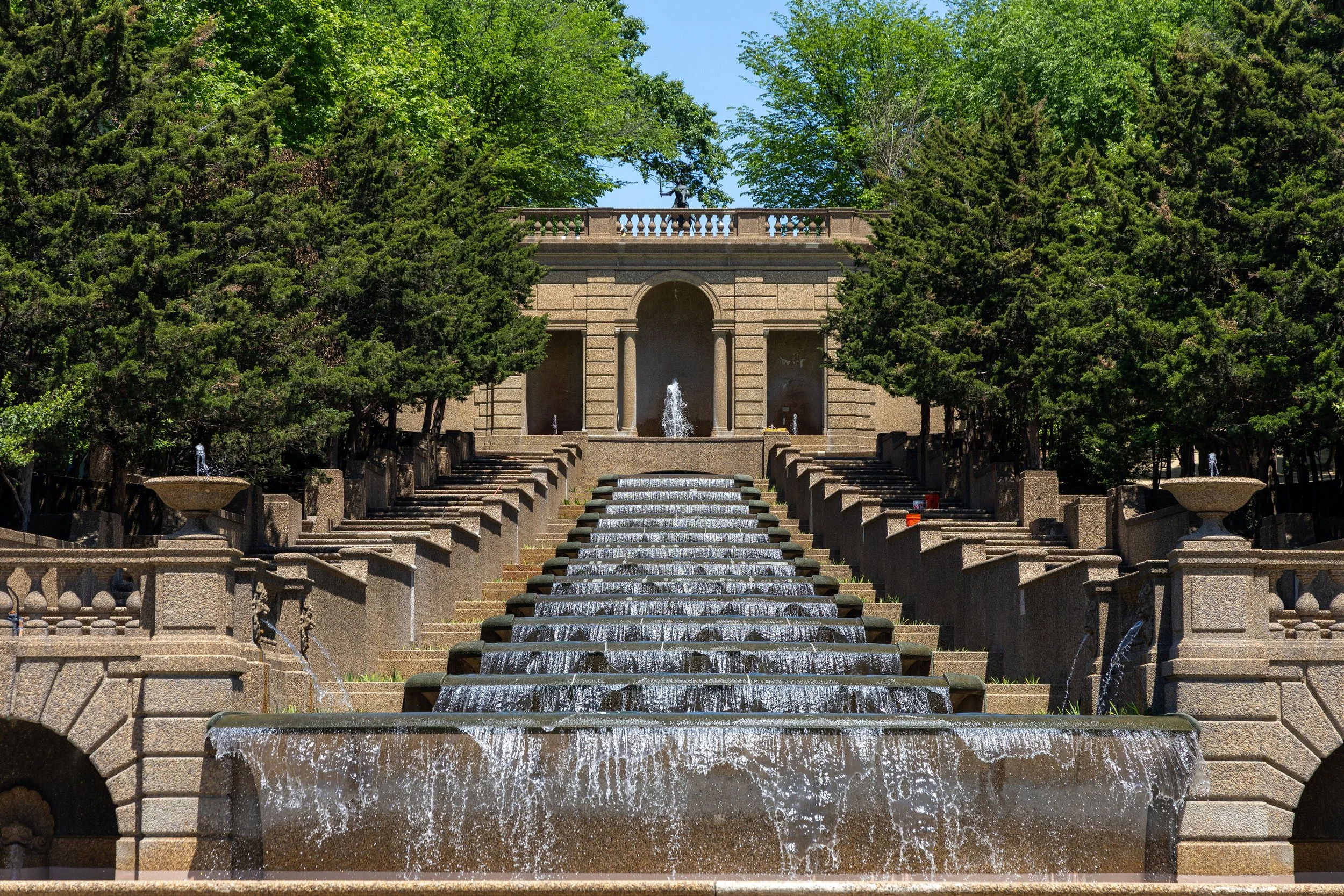
“[Meridian Hill]’s beautiful and at this time of year, with the soothing sound of the water bubbling from the fountains, the cool of the trees and shrubs, and the numbers of people enjoying the park...”
Brian Joyner is the superintendent of Rock Creek Park. The DC native has used his vast knowledge of public history to engage communities, conserve nature, and ensure the people of DC and Maryland have access to this incredible resource.
We had the opportunity to speak with him and learn more about his work in Rock Creek Park. Read our interview below to learn more.
Interview with Brian
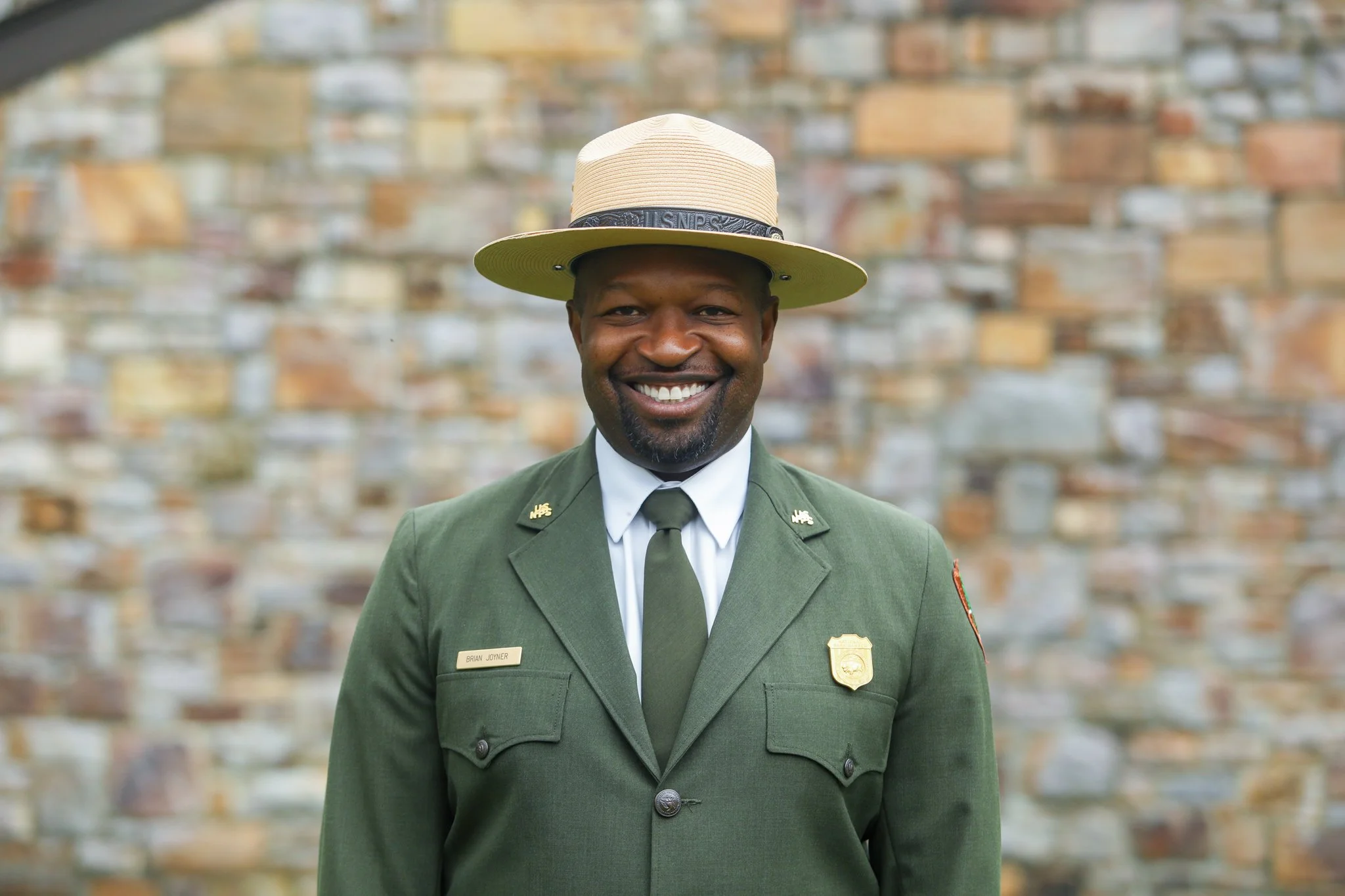
Brian Joyner in National Park Service uniform
Photo Credit: NPS / Kelsey Graczyk
You’ve been with the National Park Service for over 22 years, much of that in leadership roles. What originally drew you to this line of work?
I have bachelor's degree in history and volunteered with a local historical society prior to working for NPS. It was then that I became interested in public history; it was appealing to engage with history as an active practice, not from a remove of centuries. I came into the NPS through the Cultural Resources, Partnerships, and Science Directorate, as a writer/editor for the Cultural Resources Diversity Program. I was a contractor and eventually became a federal employee.
What’s your favorite place in Rock Creek Park, and why?
Not to sound as though I'm hedging, but which place is my favorite changes. Over the past several months, I've spent a fair amount of time at Meridian Hill Park lately, with the rehabilitation of the Cascading Fountain and other water features, statues, and landscape. It's beautiful and at this time of year, with the soothing sound of the water bubbling from the fountains, the cool of the trees and shrubs, and the numbers of people enjoying the park, one of the best spots to spend time. It's truly a remarkable place.
Which aspects of being superintendent of Rock Creek Park do you enjoy the most?
There are worse jobs than administering a national park site, but one of the aspects of the job I enjoy most relates to engagement with people. Hearing from them what they like most, or where they spend their time in the park—with over 3,000 acres there are lots of options. Staff events, public programming, any chance to talk with people about what they love about the park.
How much of your historian background influences your approach to your work?
It reminds me to think about the layers of activity that have occurred in and around the park. From the Nacotchtank peoples who quarried and traded within the Rock Creek watershed; to the development of Washington, DC as the seat of government; to the Civil War history within the park that few people know about; to a city of neighborhoods like Brightwood, Cathederal Heights, Crestwood, and Tenleytown, and the constant reimaging of who the park serves that accompanies all of the changes.
If you had to convince someone to visit Rock Creek Park who’d never visited before, what would you tell them?
[Dramatic voice] What if I told you that hike, cycle, birdwatch, play tennis, and kyack all without leaving Washington, DC? All within walking distance of great restaurants and the history that shaped the nation. And that you could do most of it free of charge? Would you come?
What are you looking forward to most during National Park Week this Aug. 22–30?
To see what my sister parks are doing. Invariably, there is incredible programming happening around the service and National Park Week gives all of us a glimpse into what going on elsewhere.
What performers are you most looking forward to seeing this Aug. 20-22 in Carter Barron at Summer in the Parks, which you and the National Park Service have done so much to make happen?
All of them! For years, Carter Barron provided the soundtrack of the DC's summer and the lineups on all three nights will reinforce that belief.