

Crabbs Branch Conservation Landscaping Project
Rock Creek Conservancy: Solving stormwater pollution one HOA at a time.
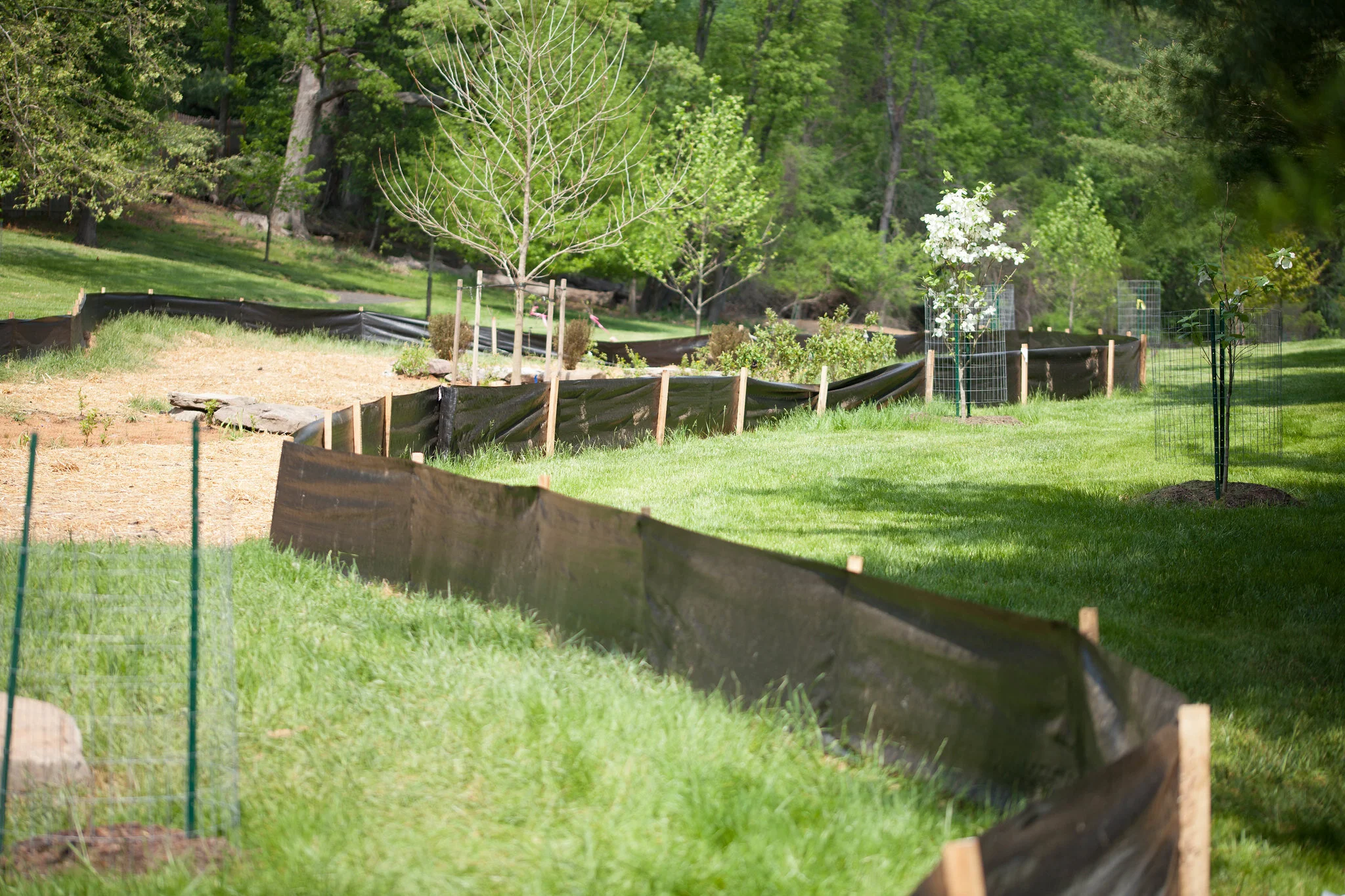
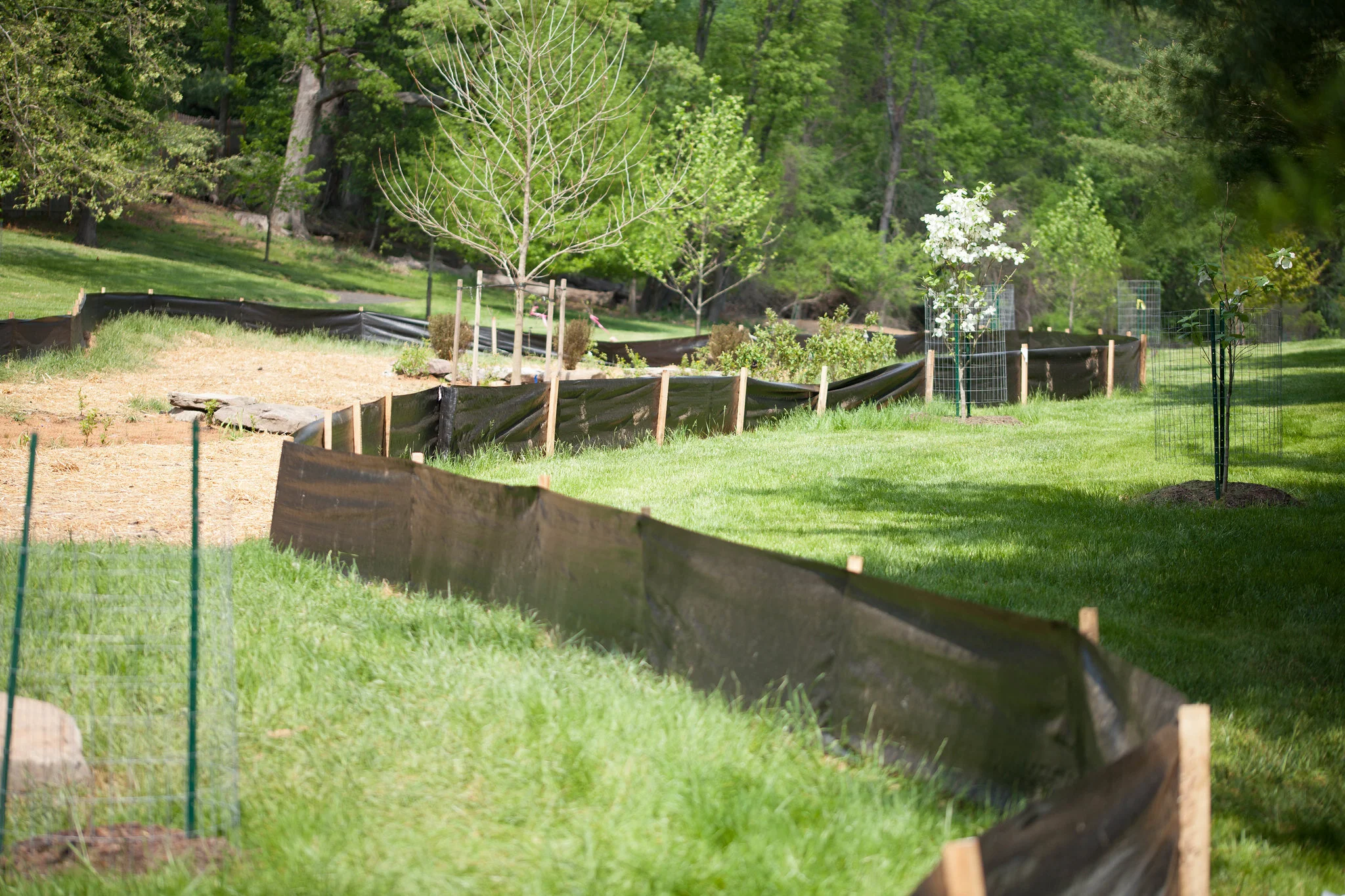
The Conservancy’s Crabbs Branch Conservation Landscaping Project broke ground in May 2018 in Derwood, MD, where a concentration of runoff from hard surfaces like driveways, and streets led to a full-blown stormwater situation. When it rained, a stormwater pipe funneled thousands of gallons of stormwater into the 2-acre grassy common area of a local homeowners association (HOA), Derwood Station Homeowners Association #2.
It wasn't just a neighborhood nuisance. That water flowed directly into Crabbs Branch, a tributary of Rock Creek, causing erosion of the streambanks and pollution of the area’s local waters with chemicals and sediment.
Funding for this project was provided through the Montgomery County Water Quality Protection Fund.
Project partners included Chesapeake Bay Trust, Montgomery County, J&G Landscape Design , and Ecological Landscape Designer Darlene Robbins
“We are delighted to see this project, the result of a close partnership between Derwood Station Homeowners Association #2, Inc. and the Rock Creek Conservancy, move from the planning phase into the execution phase. Our partnership with the Conservancy allowed what would have remained but a concept to become a reality in our community.”
— Tom Jordan, HOA Vice President
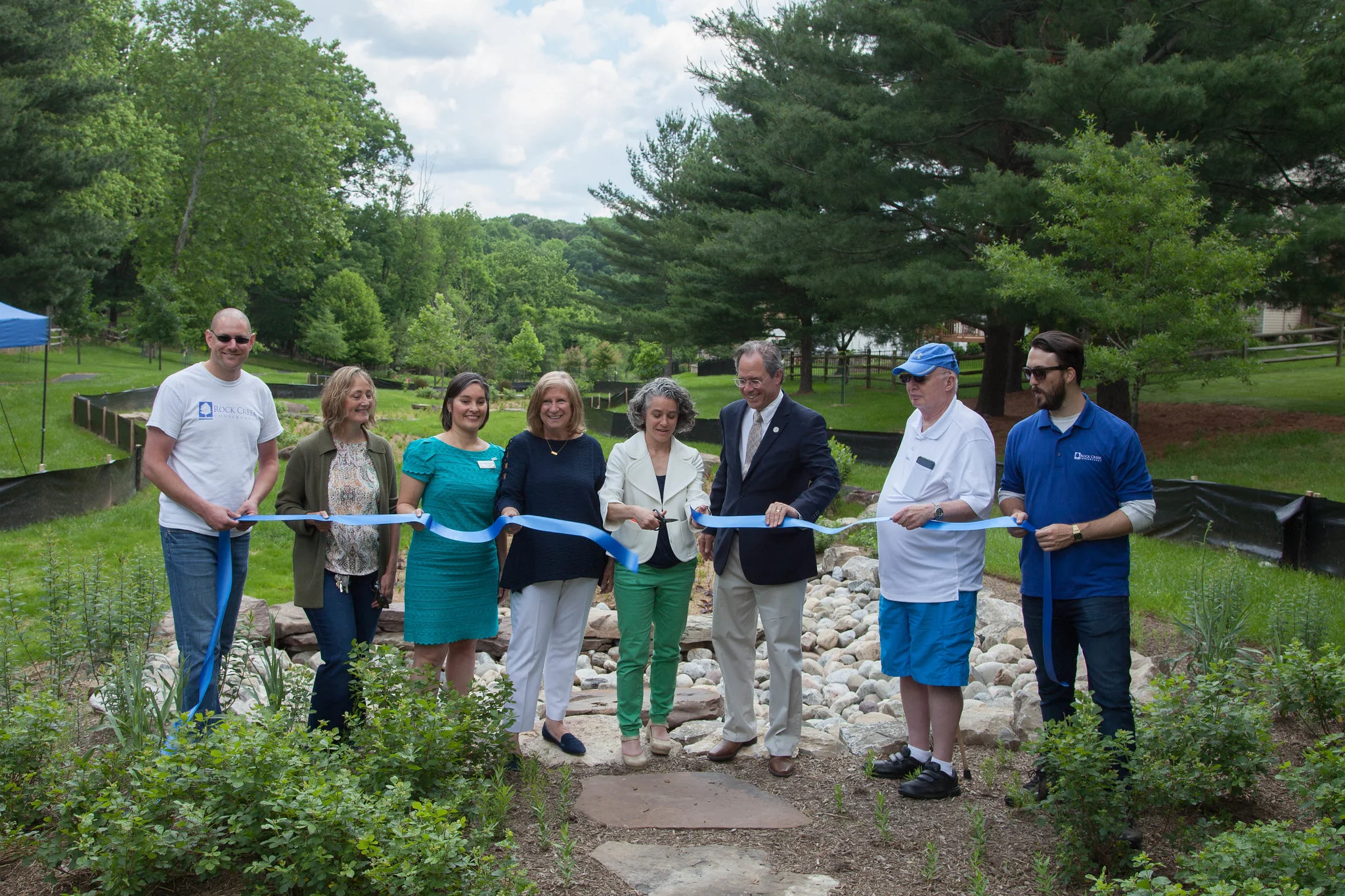
“Stormwater runoff is one of the few forms of pollution that is growing in the Chesapeake region. Projects like Rock Creek Conservancy’s Crabbs Branch Conservation Landscaping Project are an essential part of the solution. The Trust is proud to support projects like this that meet multiple community needs and make an immediate and lasting impact on the environment.”
— Dr. Jana Davis, President, Chesapeake Bay Trust
Crabbs Branch Conservation
Landscape Facts
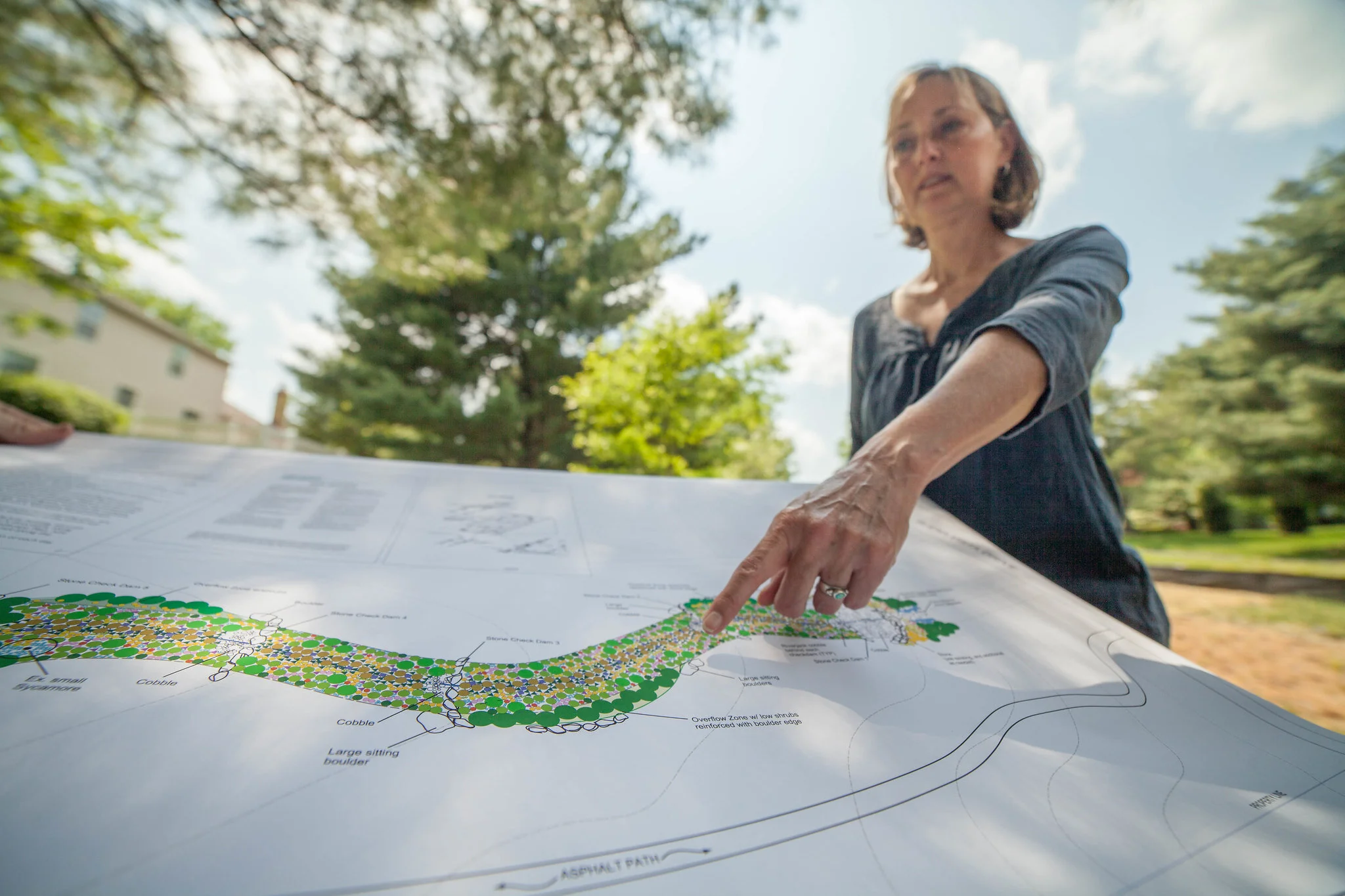
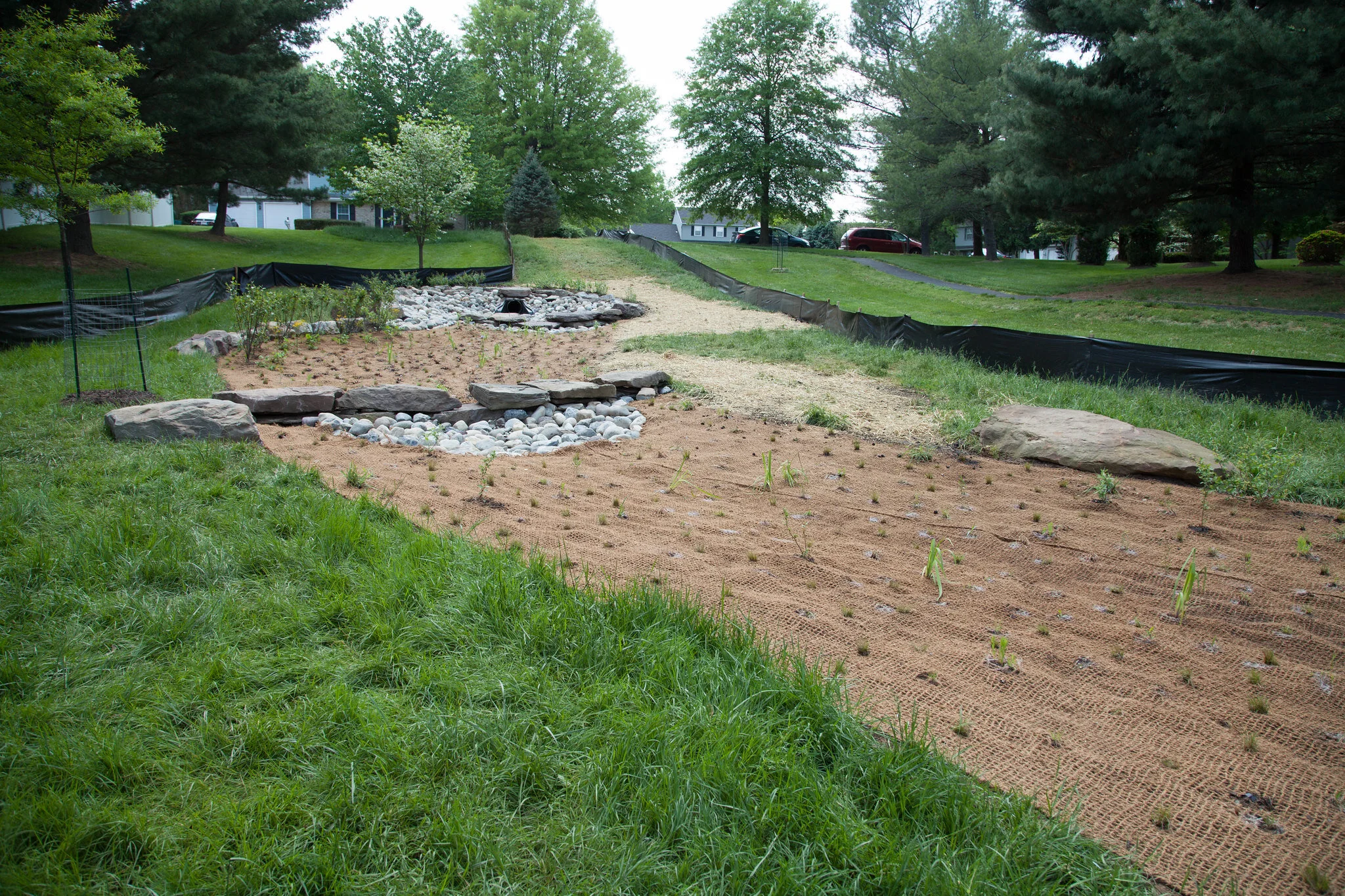
The landscape is over 3000 square feet of conservation landscaping in addition to the planting of several trees and the installation of a walkway along the periphery of the community space.
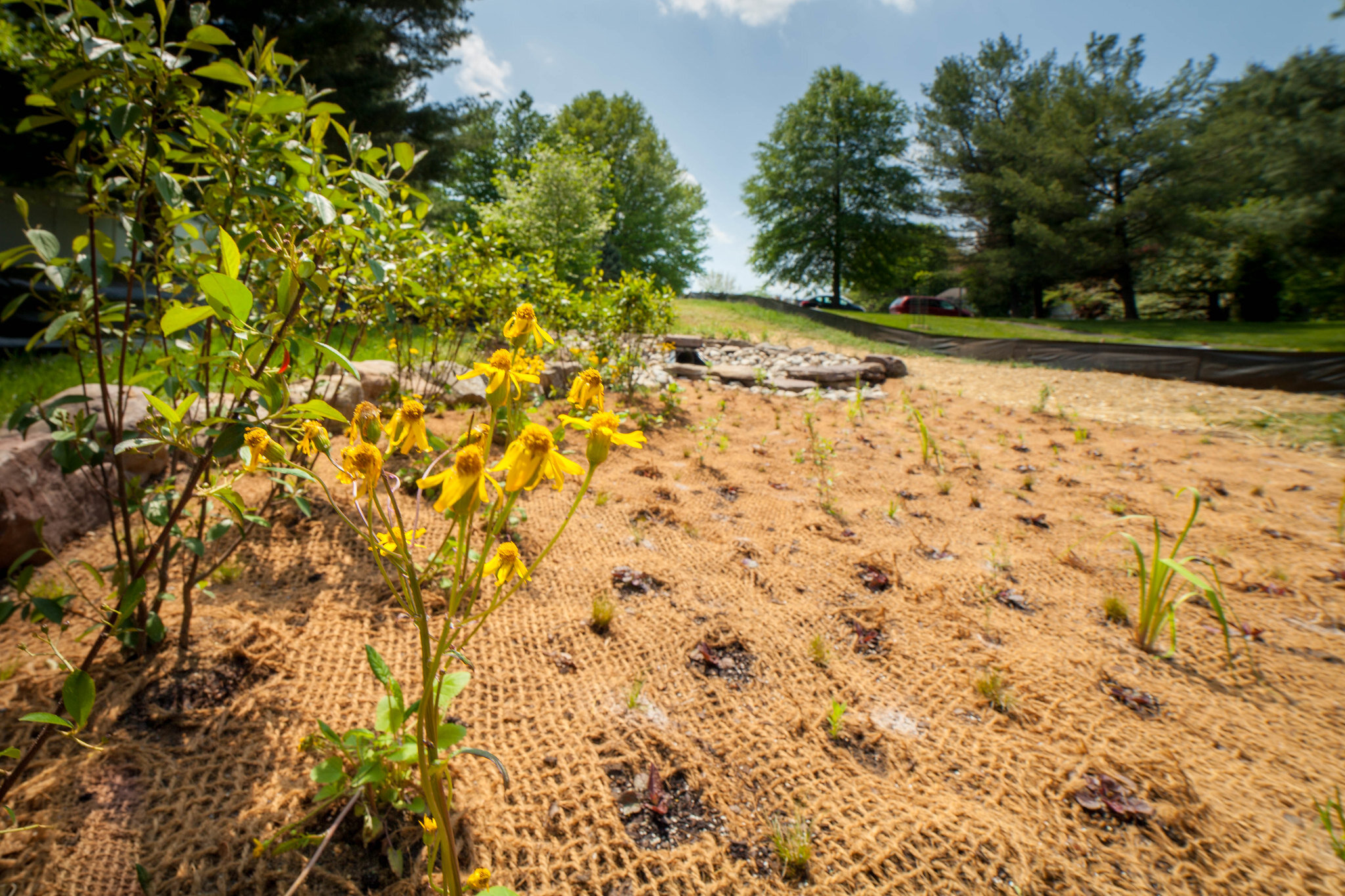
There are nearly 3000 native plants in this installation, including some gorgeous flowering perennials which will give a habitat to native pollinators.
There are 28 different species of grass, sedge, flowering perennials, and shrubs in this landscape. All of which have been strategically planted to slow and absorb stormwater.
There are five check dams and cobble pools which slow down and catch stormwater so it can be absorbed into the ground.
Over 50 tons of stone, cobbles, and boulders are used to beautify and fortify the site while guiding water flow.
The curves of the design mimic a natural stream bed, but they also help to slow down water that enters the system.
This project uses an innovative stormwater solution: green mulch. Green mulch is used instead of regular hardwood chips, which have a tendency to wash away under heavy stormwater stress.